Specialist Certificate in EMDR (Eye Movement Desensitisation and Reprocessing)
Discover the World’s Gold Standard for trauma treatment, anxiety, depression & more
Watch This Video To Understand EMDR
Clinical Hypnotherapy Works
Where Traditional Psychotherapies Often Don’t...
Even with talk therapies, clients often stay stuck in the same emotional loops. That’s because:

They repeat familiar patterns, even when they want to change.

Traditional talk therapy can’t fully reach the subconscious drivers beneath those patterns.

Many clients intellectually “understand” their issues, but can’t shift the emotional imprint that keeps the cycle alive.
Why Talk Therapy and Traditional Approaches Ain't Enough
Why Talk Therapy and Traditional Approaches Ain't Enough
Many widely-used therapy models work at the surface — managing symptoms, building coping skills, reframing thought patterns. However, for clients carrying unresolved trauma, even skilled therapy can hit a ceiling.
Anxiety keeps returning because the root memory was never processed.
Talk-based work can't always reach what's stored in the body.
Without a trauma-specific approach, progress plateaus — for both client and therapist.
Why Is EMDR The World's Gold Standard Trauma Treatment?
EMDR is not a trend — it is one of the most rigorously researched and globally endorsed psychological interventions available today. EMDR is a first-line trauma treatment recommended by the World Health Organization (WHO).

Evidence-Based & Clinically Validated
Backed by decades of peer-reviewed research, EMDR has been shown to significantly reduce trauma symptoms — often in fewer sessions than cognitive therapies. It is endorsed by the World Health Organization (WHO), the American Psychiatric Association, and leading health bodies worldwide.

Works at the Source, Not the Surface
Using the Adaptive Information Processing (AIP) model, EMDR helps clients reprocess distressing memories that are stored maladaptively — resolving the root cause of anxiety, phobias, grief, and trauma rather than just reducing symptoms.

Integrative & Clinically Versatile
EMDR is not limited to PTSD. It is effective across a wide range of presentations — panic disorder, performance anxiety, bereavement, relationship difficulties, chronic pain, habits, and eating disorders — making it one of the most versatile tools in a clinician's toolkit.
Why Is
Clinical Hypnotherapy
Effective?
Hypnotherapy is grounded in neuroplasticity research and validated through over 30 years of clinical practice.

It guides clients into a relaxed, focused state
Allowing the mind to bypass surface defenses and access deeper emotional material.

It reaches the subconscious mind
Where unresolved childhood experiences, emotional patterns, and core beliefs are encoded.

It creates rapid, lasting change
By combining subconscious reprocessing with new emotional learning — allowing clients to break long-standing patterns at their root.
How To Get Certified As A
CLINICAL HYPNOTHERAPIST
and become a Registered Member of the British Society of Clinical Hypnotherapy and Integrative Psychotherapy (BSCHIP)
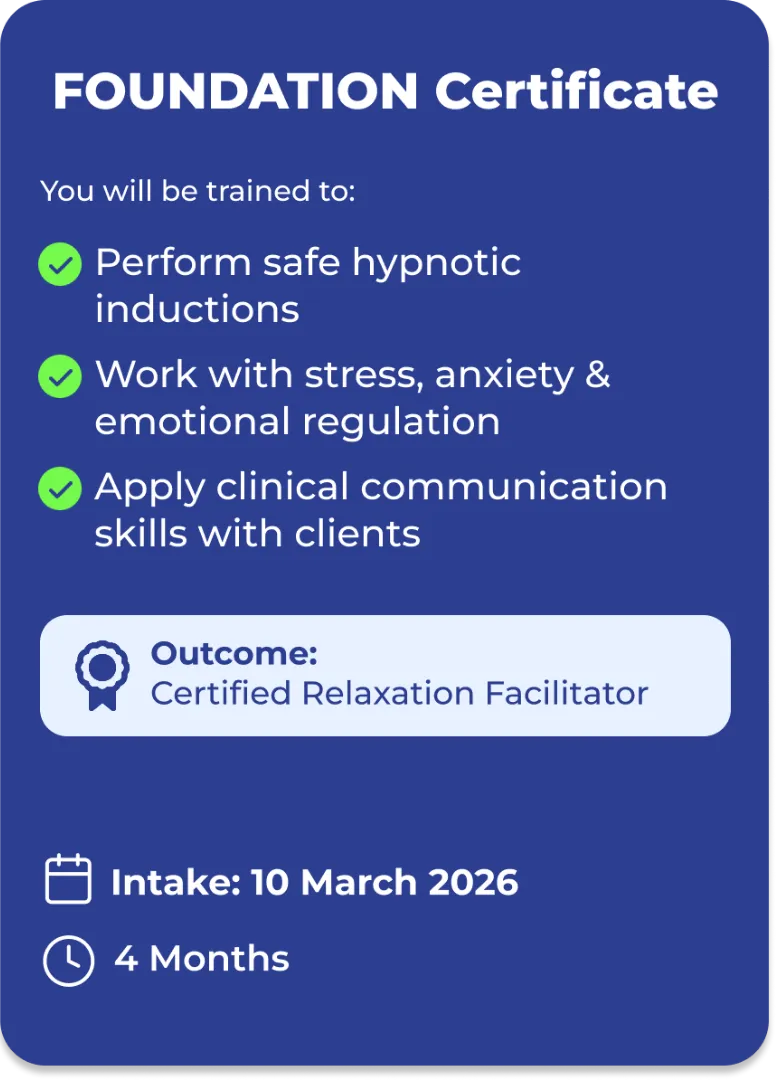
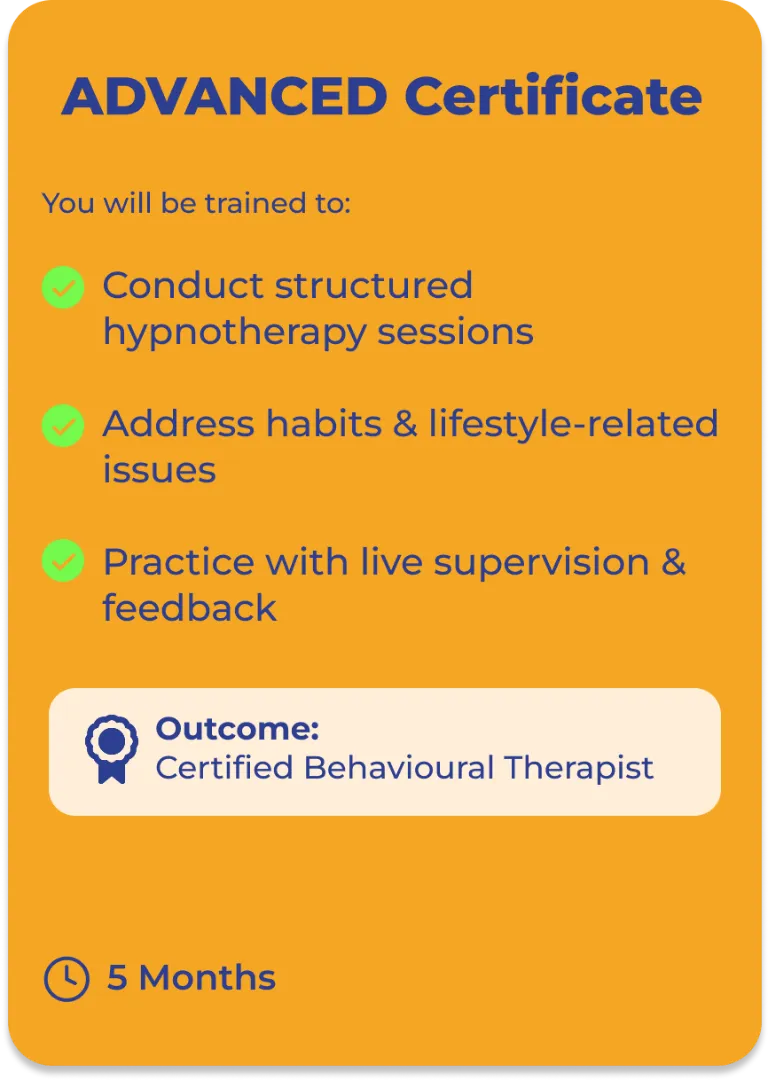
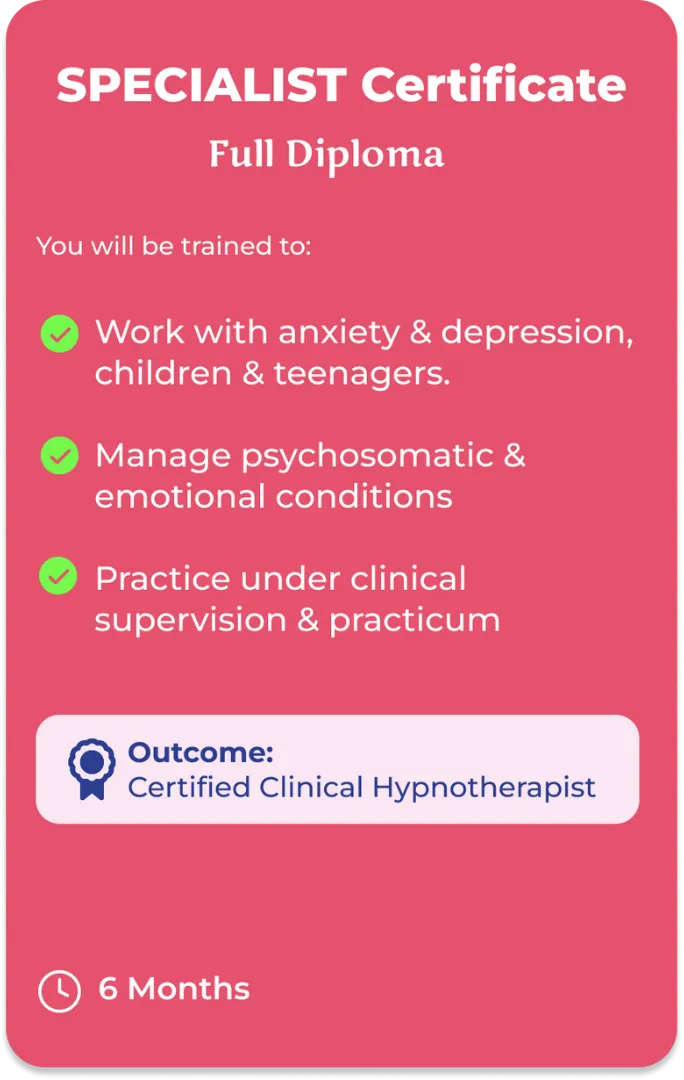
A Full-Stack, Accelerated Pathway — Designed for Flexible Learning
Three Certifications. One Diploma.
A Clear Pathway.

Hear About the Programme Directly
Get a closer look at what the Specialist Certificate in EMDR covers, how the programme is structured, and what to expect as a participant.
Watch This Video to Learn about our Specialist Certification!
Why Learn With Us?
Earn a Globally Recognized Credential
Graduate with a Specialist Certificate in EMDR, a therapy recognized by the World Health Organization for its effectiveness in trauma treatment.
Fully Online Live Virtual Learning
Learn from anywhere across four live training weekends, without the commute. More flexibility, less disruption — perfect for working professionals.
Build Confidence Through Supervised Practice
Practise EMDR throughout the course under the watchful eyes of our experienced lecturers and facilitators - so you graduate ready to apply it, not just understand it.
Join a Professional Association
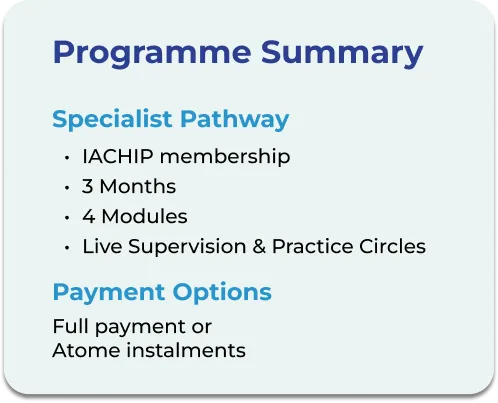
Gain International Association for Clinical Hypnotherapy & Integrative Psychotherapy (IACHIP) membership upon enrolment — supporting your ethical practice, professional standards, and ongoing development throughout your career.
Learn Alongside Fellow Practitioners
Exchange clinical perspectives with peers and lecturers through structured discussion — deepening your learning through real cases, not just theory.
Why Learn With Us?
Globally Recognized Diploma
Not just another certificate. This is a full Diploma in Clinical Hypnotherapy — comprehensive, internationally recognized, and designed to meet global standards of practice.
Fully Online Learning
Study from anywhere. Learn with a supportive online community, without the commute. More flexibility, less disruption — perfect for working professionals.
Accelerated Learning Structure
Become a Clinical Hypnotherapist in just 15 months with a structured, step-by-step training pathway.
Professional Membership
Graduates automatically qualify for membership with the prestigious British Society of Clinical Hypnosis and Integrative Psychotherapy (BSCHIP) — enhancing your professional standing worldwide.
Practice Circles & Real Clinical Experience
Join our in-person practice circles and gain supervised client experience through our community pro-bono initiatives.
Who Is This For?
This Specialist Certificate is designed for qualified practitioners who are ready to take their clinical work to a deeper level. You'll need post-qualification experience to get the most from this programme.
Qualified Therapists and Counsellors
Clinical Hypnotherapists Working with Clients
Healthcare and Mental Health Professionals
Practitioners Supporting Clients with Trauma, Anxiety, Grief, or Complex Emotional Challenges
Hear From Our Graduates
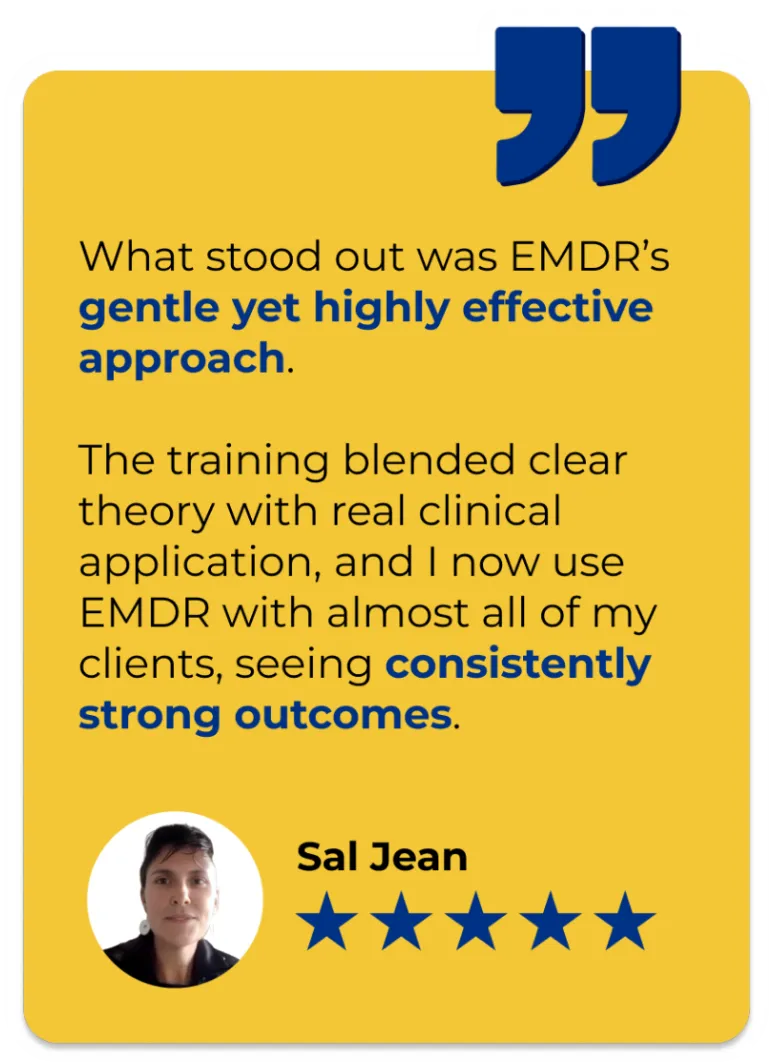
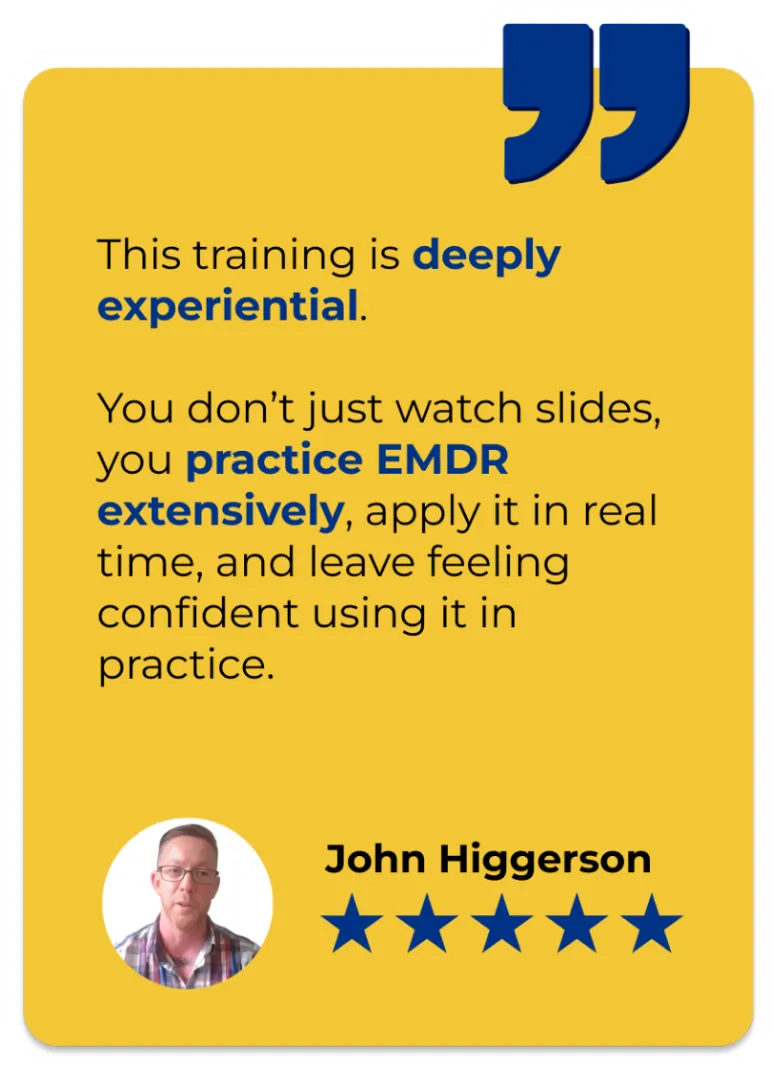
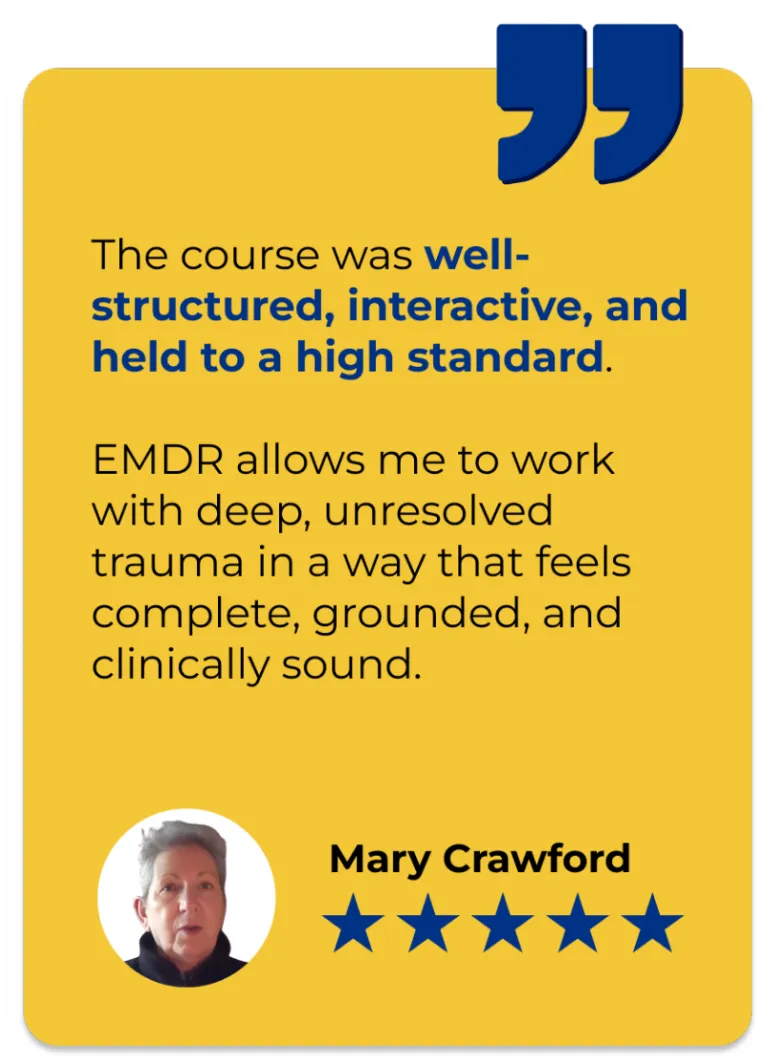
What Our Graduates Love About The Course


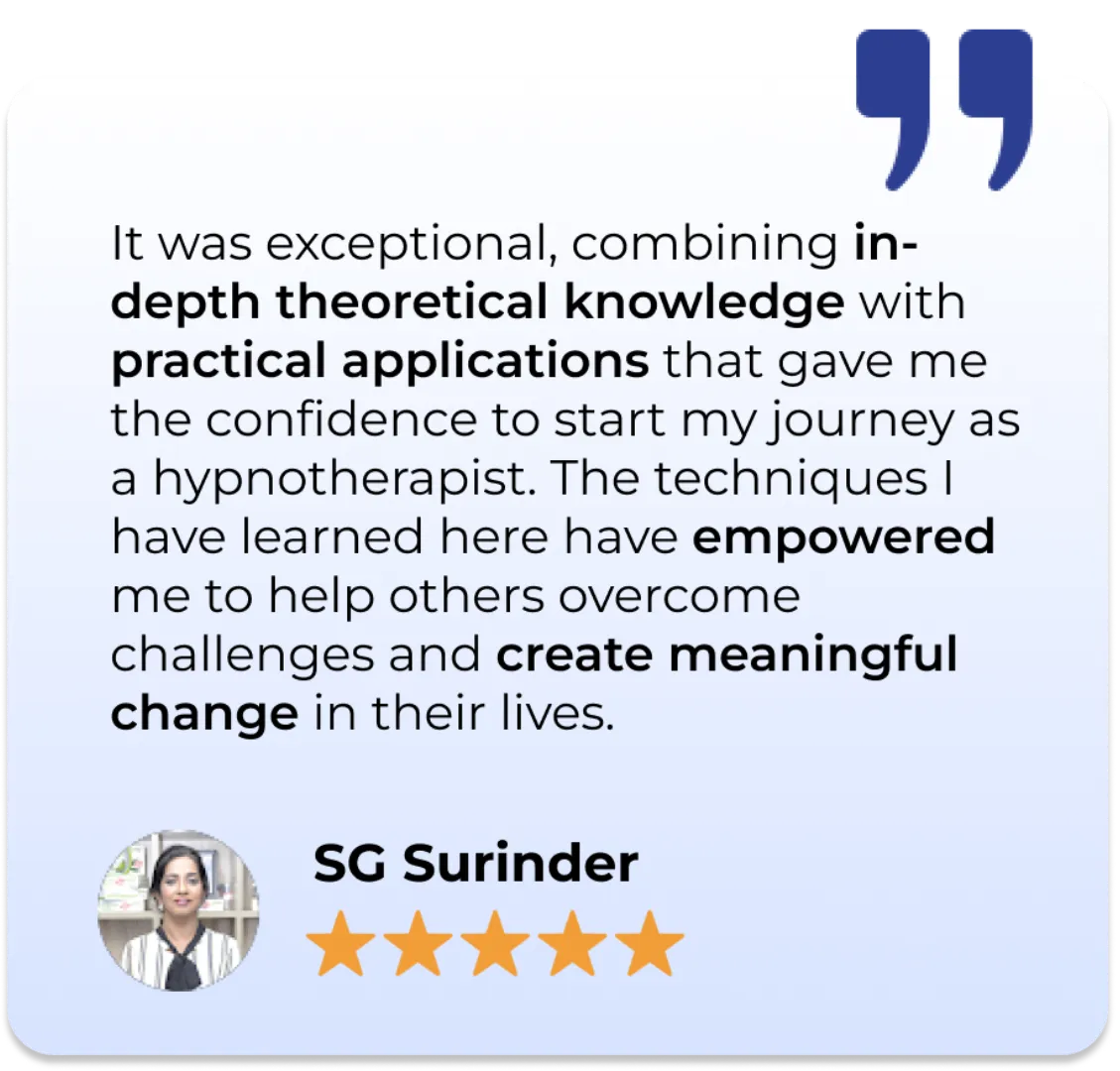
Hear From More Graduates!
Ms Raji, a retired teacher, who turned her passion for the human mind into a career as a clinical hypnotherapy expert.
Nur Azimah shares how clinical hypnotherapy had supported her mother through her breast cancer journey.
Dr. Annapurny shares how hypnotherapy has been life-changing and helps her patients overcome anxiety and phobias.
Frequently Asked Questions
Everything you need to know about the program!
Do I need prior EMDR experience to join?
No prior EMDR-specific training is required. However, you must have a foundation in clinical training and experience. We focus on the responsible integration of EMDR into your existing therapeutic toolkit.
I’m already trained in other modalities. Is this relevant?
Specifically so. This session addresses how the EMDR Specialist Certificate is built for the "Multimodal Practitioner." We discuss how to use EMDR as a powerful tool within your existing therapeutic toolkit rather than a standalone, isolated process.
Is this an accredited or recognized EMDR training?
Yes, this EMDR program is accredited by the National Council of Integrative Psychotherapists (NCIP) and the International Council of Psychotherapists (ICP). It awards a Specialist Certificate in EMDR, a WHO-recommended trauma therapy.
Please note that while this provides high-level specialist skills, it is not positioned as a full accreditation pathway through national associations, making it ideal for practitioners who prioritize practical integration over academic accreditation.
Can EMDR skills really be mastered online?
Absolutely. Research and practice have shown that EMDR can be effectively taught online through live training, real-time demonstrations, and guided practice. Our outcomes focus on practitioner skill and supervision, proving that competency depends on the quality of instruction, not the physical location.
Join our FREE Info-Session to learn more!
🗓️ 29 Apr 2026 (Wed)
⏰ 8pm - 9.30pm (SGT)
📍 Live via ZOOM
Masterclass Speaker

PETER MABBUTT
BSc (Hons), MSc, FBCH, MBACP
Clinical Hypnotherapist & Integrative Psychotherapist
Director of Studies, London College of Clinical Hypnosis
President, British Society of Clinical Hypnotherapy & Integrative Psychotherapy (BSCHIP)
Peter Mabbutt is a highly experienced Clinical Hypnotherapist, Integrative Psychotherapist, and educator, serving as the Director of Studies at the London College of Clinical Hypnosis. He has been working in clinical practice and professional training since 1997, following an earlier career in Psychopharmacology research at Guy’s Hospital, London.
Peter specialises in trauma-informed work, pain management, the mind–body connection, relationship challenges, and men’s psychological well-being. His work integrates evidence-based hypnotherapy with psychotherapy and neuroscience-informed approaches, supporting both clinical outcomes and long-term psychological resilience.
A dedicated and respected educator, Peter has developed and led hypnotherapy and psychotherapy training programmes internationally, including the design and delivery of an MSc programme for a leading British university. He also played a key role in establishing the Hypnotherapy Pain Management Clinic and research programme at University of Malaya Hospital in Kuala Lumpur.
Peter is a highly regarded international speaker and co-author of the widely recognised books Hypnotherapy for Dummies and Self-Hypnosis for Dummies. He regularly lectures, trains practitioners, and contributes to public education through conferences, masterclasses, and radio programmes across the UK and Southeast Asia.
Masterclass Host

YI JUAN LOW
Co-Founder, Breakthrough Academy & Therapy
Yi Juan is the Co-Founder of Breakthrough Academy & Therapy and has over a decade of experience in the personal development and mental well-being space. Her work centres on supporting individuals and organisations in building self-awareness, emotional resilience, and sustainable growth.
She is committed to creating thoughtful, supportive environments where people feel seen, heard, and empowered to reflect, learn, and move forward with clarity and intention.
What You Will Learn
Uncover Why Trauma Responses Persist
See why certain memories, triggers, and emotional reactions continue to surface — even long after difficult experiences have passed.
Understand How EMDR Resolves Trauma
Explore how EMDR helps the brain process difficult experiences and supports lasting emotional change.
Learn How EMDR Is Applied in Practice
Get a clearer picture of how clinicians integrate EMDR into therapeutic work and how this structured approach supports trauma processing.
Expand Your Clinical Toolkit
Discover how EMDR can support a wide range of conditions such as trauma, grief, relationship struggles, recurring patterns, and emotional distress.
🗓️ 29 Apr 2026 (Wed)
⏰ 8pm - 9.30pm (SGT)
📍 Live via ZOOM
Book a call with our team
Discuss your background and career goals
See if the programme suits your experience level
Understand intake dates, schedule, and format
Clarify fees, instalments (Atome), and inclusions
---- Other ways to reach us ----
Book a call with our team

Discuss your background and career goals
See if the programme suits your experience level
Understand intake dates, schedule, and format
Clarify fees, instalments (Atome), and inclusions
---------- Other ways to reach us ----------
REGISTER NOW!
Register even if you can't make it, so that you can receive your video replay!
Brought to you by: